
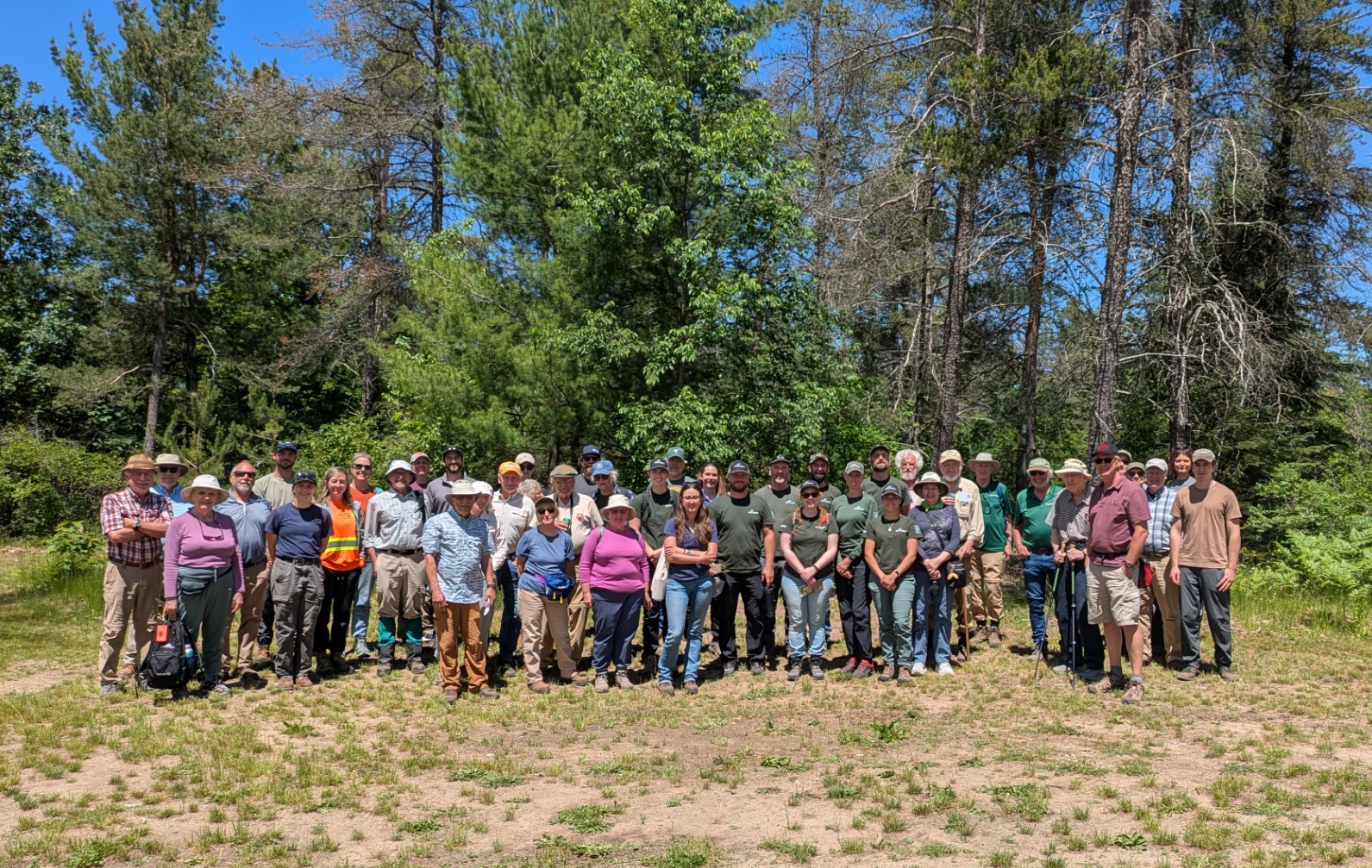
After almost a week of dire weather forecasts, June 12th defied the experts and started and stayed warm, sunny and breezy enough to keep the bugs at bay. The organizers modestly refused to take any credit for this miraculous turn of events. FHO Tour 2026 was a record turnout with just over 40 keen forest history buffs filling the yellow school bus. Starting at 9:30 and wrapping at 4:30PM we were treated to a fascinating sampling of important historical sites in a driving loop of just under 70 kms including visits to Angus, Midhurst, Fort Willow…to name a few. All participants were provided, ahead of time, with a meticulously researched and drafted 30 page ‘tour guide’ generously laden with references, pictures, quotes and graphics. Led by FHO Board member and keen historian Terry Schwan, the team of expert guides included Graeme Davis, Simcoe County Forest Manager, Ken Reese, former Midhurst Nursery Superintendent and well-known southern Ontario forester Ed Borczon (who was unable to attend).
Simcoe County, in the early 1800’s, was the site of large swaths of huge white pine growing on sandy soils which became an industrial mecca for timber operators with over 200 sawmills operating there at its peak. Not surprising that the pine was essentially gone by the late 1800s leaving behind badly disturbed soils and struggling farms. Two early Ontario forest visionaries and forest management pioneers Edmund Zavitz and E.C. Drury witnessed this devastation firsthand and spearheaded a restoration program in the 1900s resulting in the Simcoe County Forest being Ontario’s first Agreement Forest in 1922. In 1937 a plaque was erected at the Hendrie Forest Tract to mark the first ceremonial tree planting there in 1922. A second plaque was added in 1982 to mark the Diamond Jubilee of the forest and in 1996 Simcoe County assumed full responsibility from the Ministry of Natural Resources for the growing forest estate that today totals just under 14,000 hectares.
A key part of the Simcoe County success story was the Midhurst Forestry Station that supplied most of the planting stock for this forest and many others across the province. We were very fortunate to have firsthand accounts of the nurseries day-to-day operations, back in the day, from Ken Reese, former Nursery Superintendent. At its peak, the nursery produced 12 million trees in 1980 to feed a provincial commitment to expand regeneration and forest management on Crown land more generally. Interestingly, this was just after Ontario overhauled its forest tenure system creating Forest Management Agreements with forest companies across the province and dramatically increasing annual tree planting programs. The nursery started production in 1924 and closed in 1992 after the provincial government decided to allow the private sector to produce planting stock to meet Ontario’s needs. Ken regaled us with stories and images that included the early days when these nursery grounds included an impressive house for the superintendent and his family surrounded by carefully manicured gardens, grounds and trees….a true showpiece and practice that has long passed.
There followed a walking tour through a small portion of the original 1,000-acre Hendrie Forest established in 1922. Graeme Davis led a tour through several forest compartments explaining past operations, many indecipherable to the untrained eye, but illustrating the subtleties of forest management.
After enjoying the gracious hospitality of Simcoe County who provided lunch at the Forest Museum Tract, Graeme, again, led us on a short walk to the Red Pine House which is part of the Museum’s interpretive program. The real attraction though was the elusive and rare Kirtland’s Warbler Red Pine House - Simcoe County Museum. The story starts with a purchase of 300 acres from CP Rail in 1999 which included a heavily used and abandoned gravel/sand pit that was the source of rail bed material for their lines across Ontario. With plans to rehabilitate this site a unique opportunity arose in 2017 to work with researchers and bird enthusiasts from far and wide to establish suitable habitat for the very picky Kirtland’s Warbler, which is early successional jack pine-oak…not an easy forest to establish well out of the natural range of jack pine. Graeme advised that 2 males had been seen/heard in the area that spring and to our collective astonishment and delight we not only heard the calls but some of us actually got to see a Warbler…putting the tour behind schedule, but for a good cause.
The ‘tour guide’ that will be posted in Forestory in the near future and available on our website, provides a very thorough description of stops mentioned above and those visited in the afternoon including the now closed Angus Tree Seed Plant, Fort Willow Conservation Area (a treasure trove of War of 1812 history and archeology) and the Huron Lookout (Wiidookdaadiwin) which is a key marker and scenic lookout over the area and the 9 Mile Portage.
By all accounts, there was unanimous agreement that this tour was excellent and while it took a big team to make this event happen, Terry Schwan merits special recognition and thanks for his visionary leadership in organizing and leading the 6th FHO tour whose origins pre-date the pandemic. Graeme Davis at Simcoe County was particularly outstanding in providing caffeination to the group before the tour and hosting an excellent lunch ‘al fresco’ as well as providing expert history, knowledge and insights throughout the day and inviting many of his staff to join the group which provided many young, energetic and enthusiastic faces to the tour group.
Many thanks too to all who attended as well. It was a very good day
Jim Farrell June 17/26
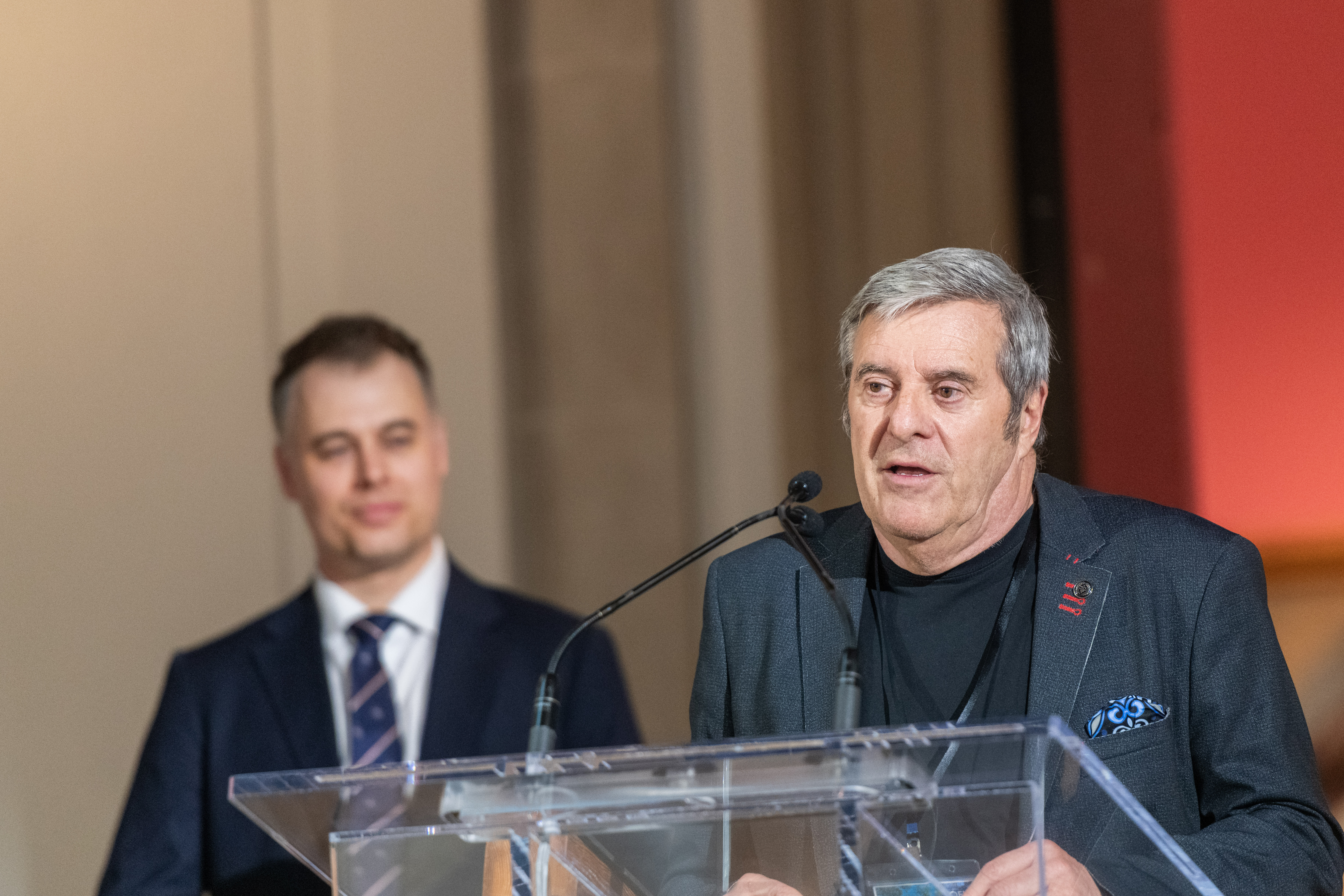
Forest History Ontario was well represented at the OFIA recent annual conference in Toronto with Board members Mike Willick and Jim Farrell in attendance. The very well attended reception was held at the Art Gallery of Ontario in Walker Court in the shadow of the iconic and beautiful staircase designed by renowned architect, Frank Gehry in 2008.
The OFIA's Forest Industry Hall of Fame was established to recognize those whose expertise and leadership have fundamentally shifted the landscape of the Ontario forest sector. It is tradition that the OFIA names their Hall of Fame awards at these evening receptions and this year they named two. Much like the smaller scale cousin, the Academy Awards, recipients are unaware of their award until the news is unveiled at the event. The first award was given to our very own Mike Willick for his decades of committed service to the forest products industry as a senior executive at OMNR and in the last couple of decades as a valued and respected advisor on the softwood lumber file. I was standing beside Mike in the congregation at the time and can attest to the fact that this was secret right up until the ‘envelope’ was opened. He was very surprised and touched. Congratulations Mike.
The second inductee to the OFIA Hall of Fame was Gaston Malette who passed away in 2025 (Gaston Malette Obituary | 1928 - 2025 | Timmins Daily Press). Gaston’s story in the industry began in 1951, 30 miles west of Timmins. He started with a single sawmill producing 4.8 million board feet a year. Through the decades, he expanded, acquiring nearly every mill in the Timmins area. By 1968, he moved operations into Timmins itself, and by 1995, that single mill was producing 140 million board feet annually. Gaston was never content with the status quo. He was a pioneer in diversification long before it became a buzzword. In 1971, he built the second Waferboard (OSB) mill in Canadian history. In 1985, he stepped into the pulp sector, purchasing the Smooth Rock Falls mill (formerly an Abitibi-Price mill) and transforming it into Malette Kraft Pulp and Power. In 1990, he expanded further into Quebec with the acquisition of St-Raymond Paper (50 kms northwest of Quebec City).
Gaston owned the first sawmill to have a Forest Management Agreement in the Romeo Malette Forest - named after his father. His influence extended far beyond the borders of Ontario, including assets in Quebec. He was twice selected by the Ontario Premier to attend the Global Economic Summit in Davos. He served on the Board of Directors for the National Bank of Canada and Forintek and was even invited by the United States to speak on the wood industry in Alaska.
When Malette Inc. was eventually sold to Tembec in 1995 (Frank Dottori was also in attendance) , Gaston remained on the Board, continuing to offer the insight that had built an empire from a single small mill in the bush. Gaston Malette represents the very best of the forest sector a respected member of that select special breed of entrepreneurial businessman who also had a deep respect for the forest. Gilles Malette, Gaston's son, accepted the honour on behalf of the family.
The next day the conference, hosted at the Grand Banking Hall of 1 King West (formerly the HQ of former The Dominion Bank … now TD Bank) and was a full house. The OFIA (Ian and team) once again did a terrific job getting provincial politicians out to open the day. Almost half a dozen Cabinet Ministers attended, including Premier Ford who provided passionate and well-informed support for the forest products industry ..which was very much appreciated. Speakers included very well-developed presentations on the state of the industry, forecasts on the future, opportunities for partnerships and advice going forward.
This event was also a celebration of the 83rd anniversary of the OFIA and by all accounts, it is getting stronger every year.
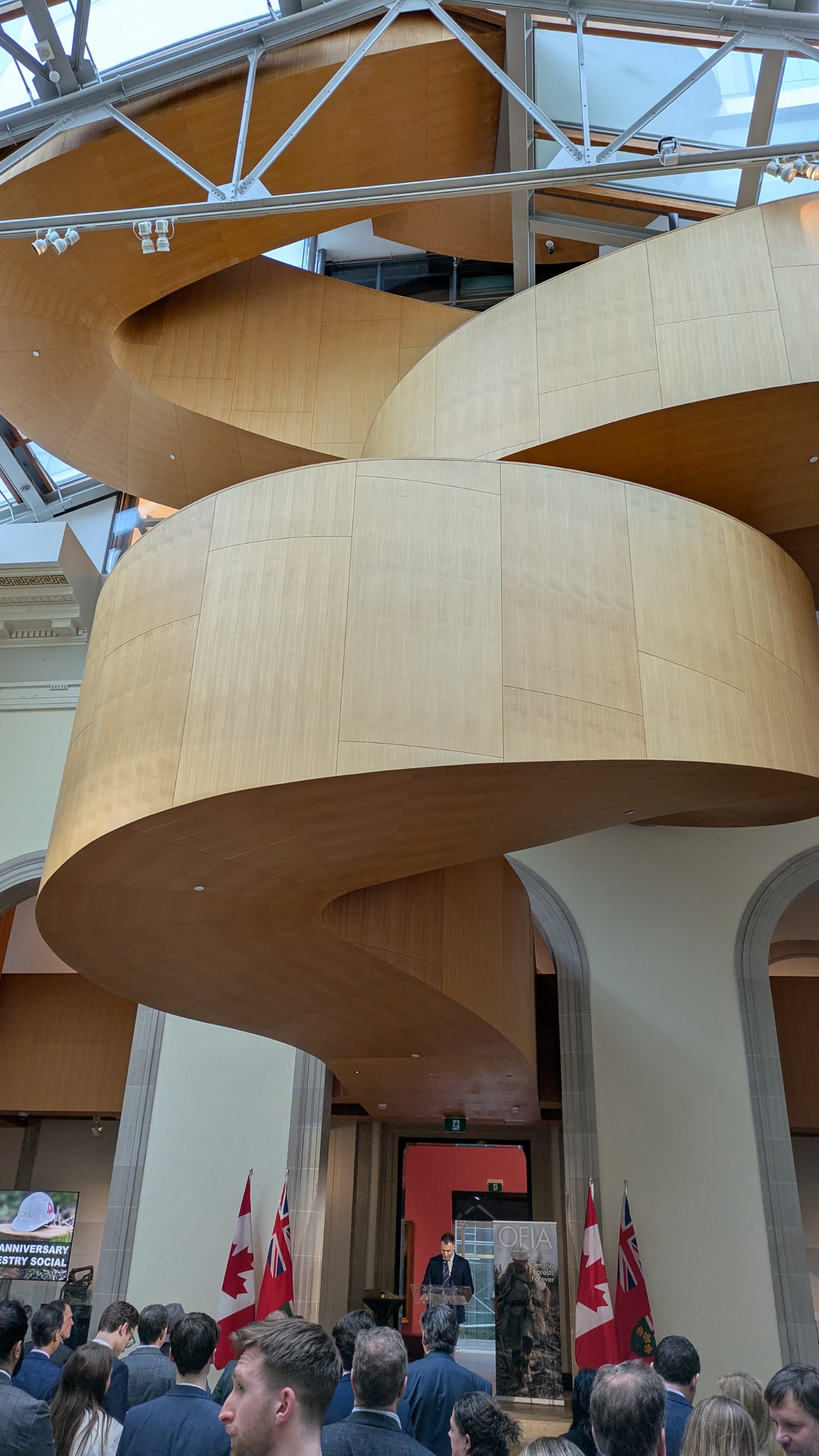
AGO - Frank Gehry's Staircase
Ian and M. Mallette
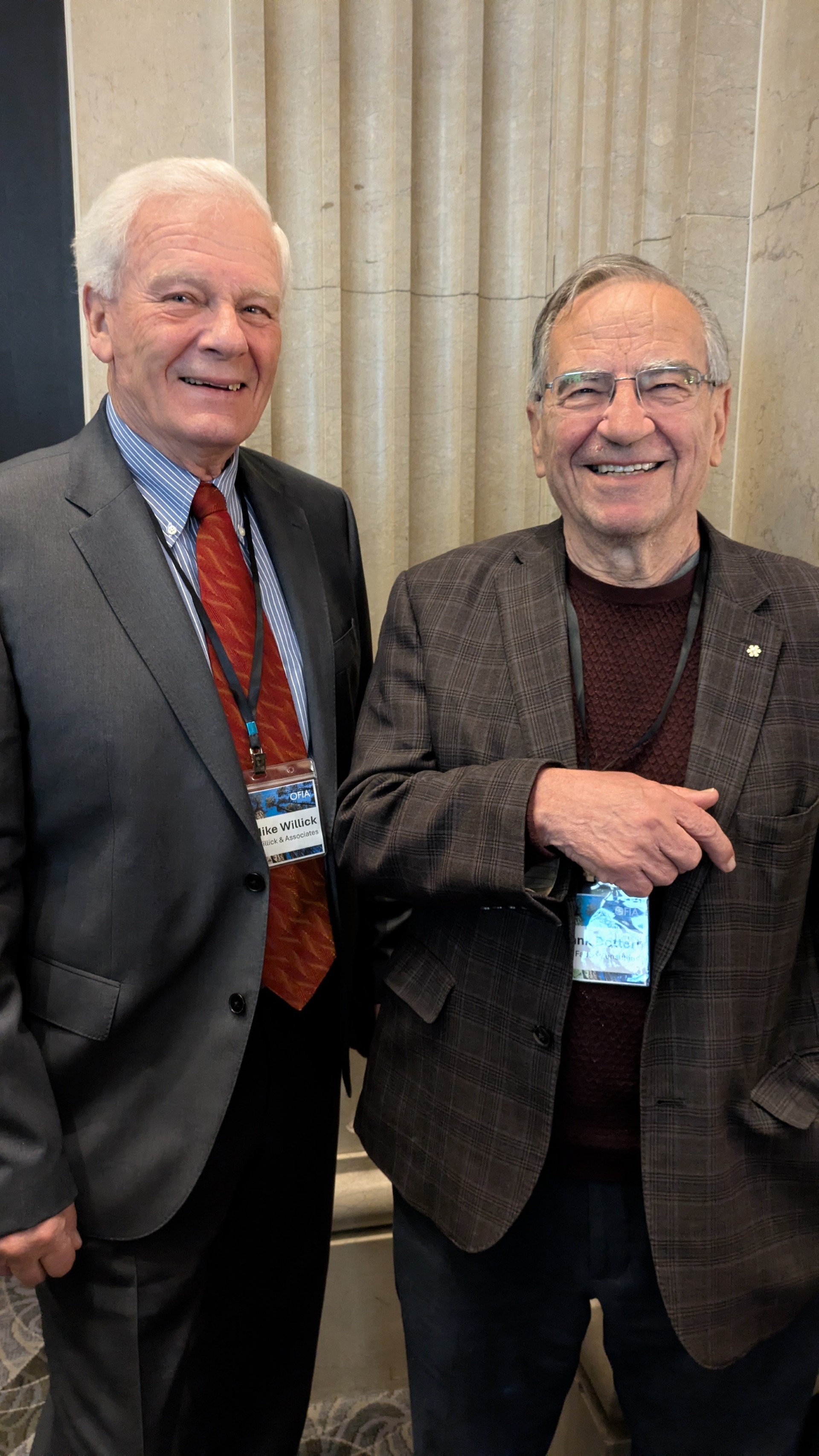
Mike and Frank, 2026
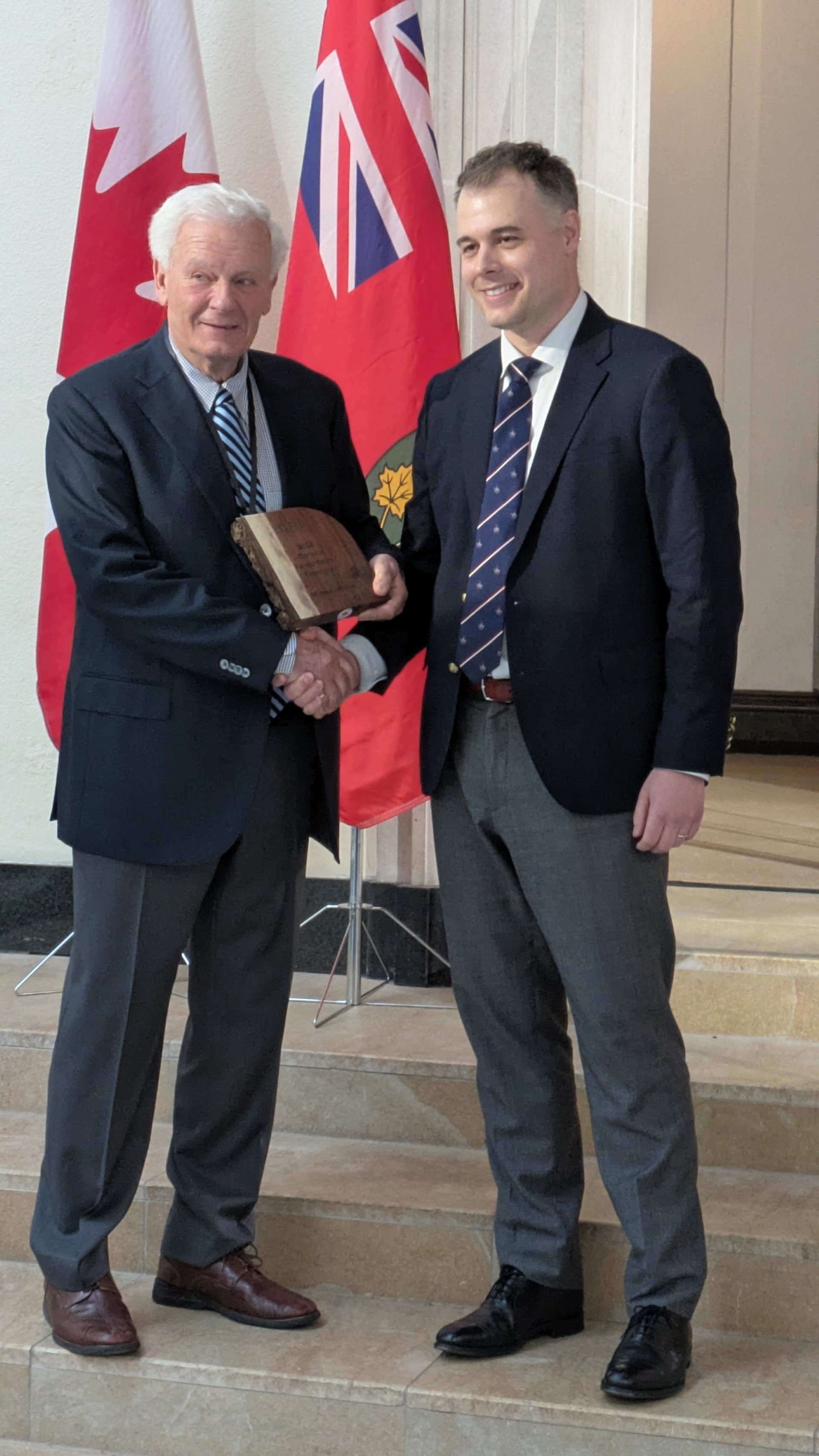
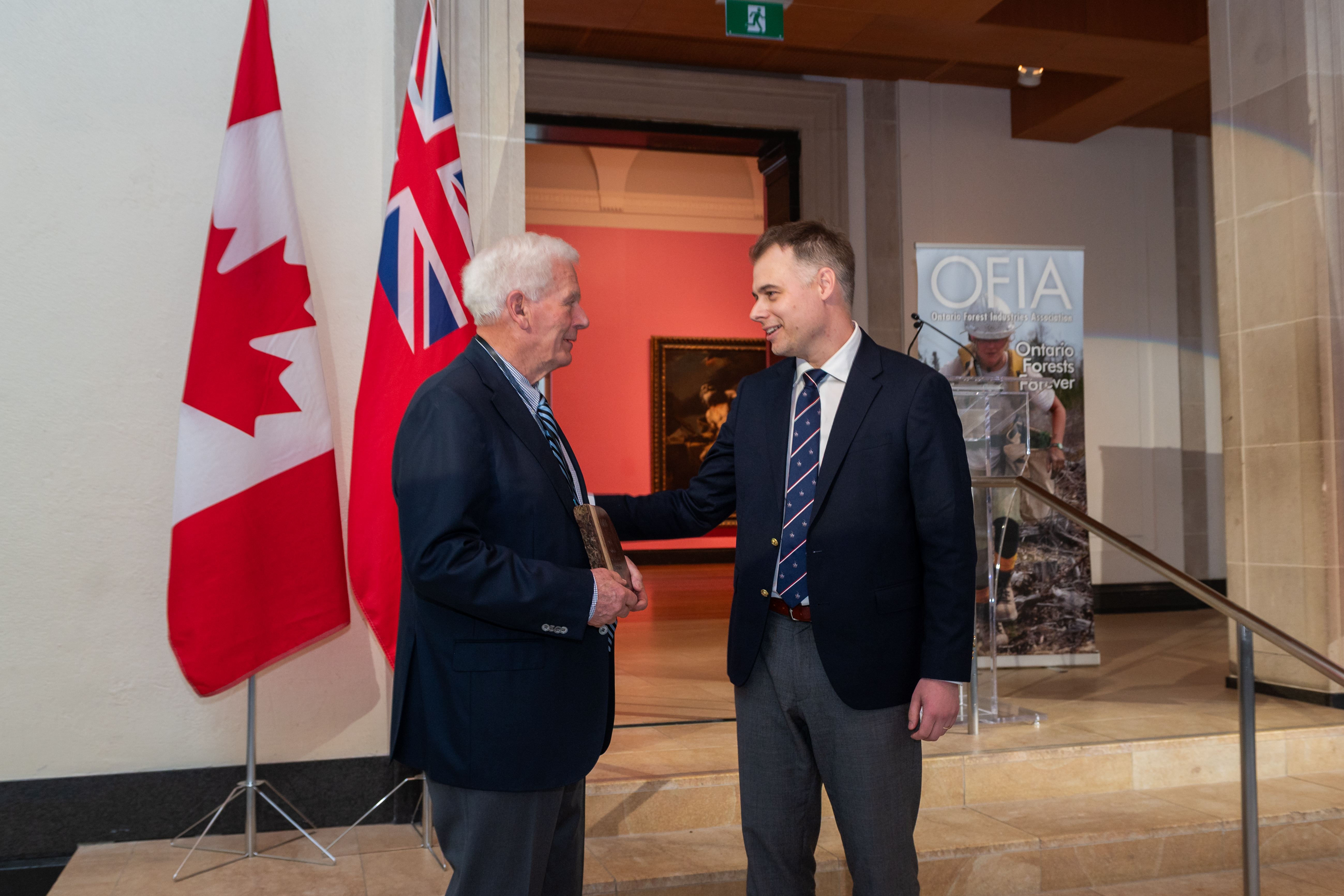
Mike and Ian
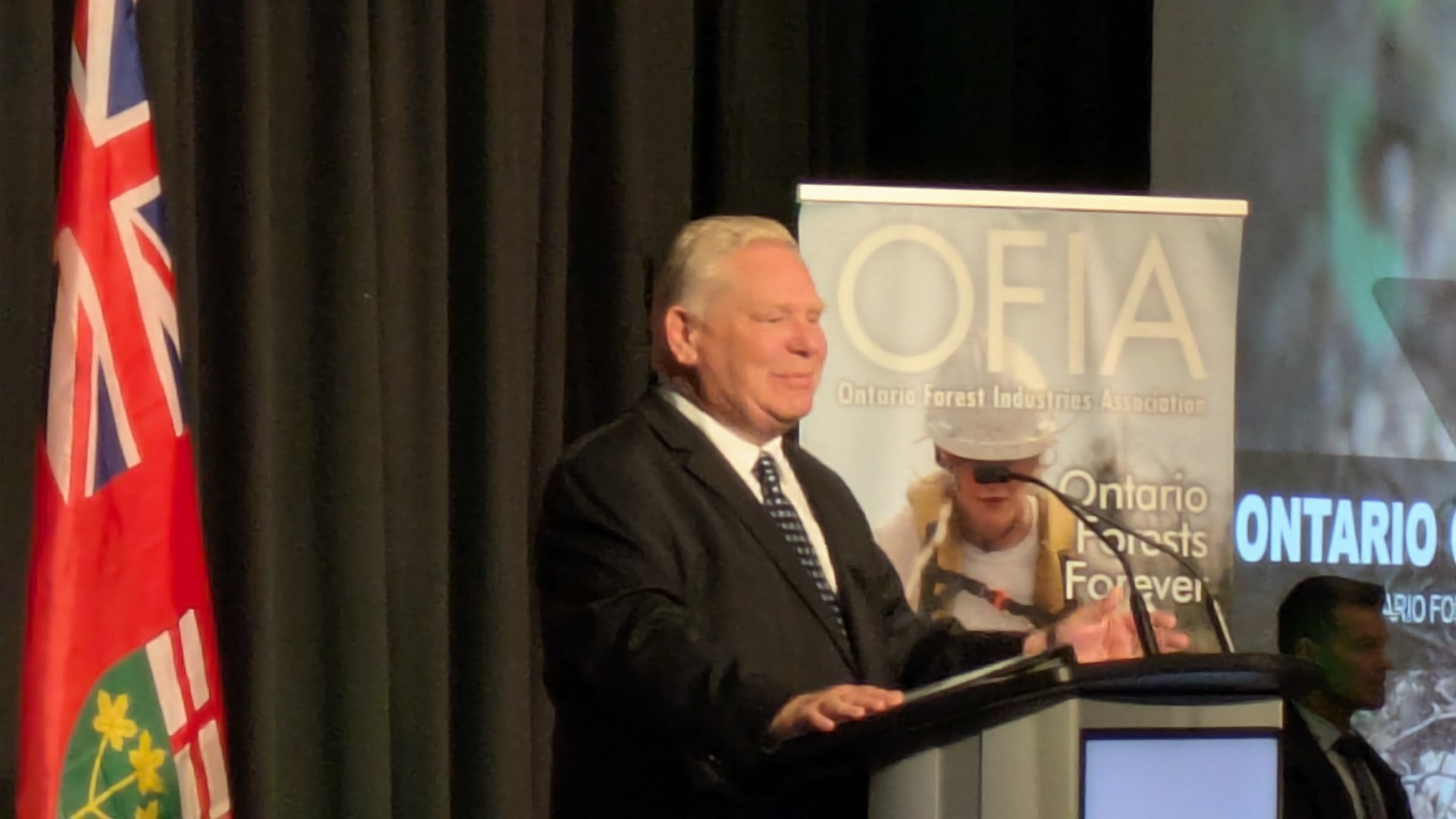
Premier Ford, 2026
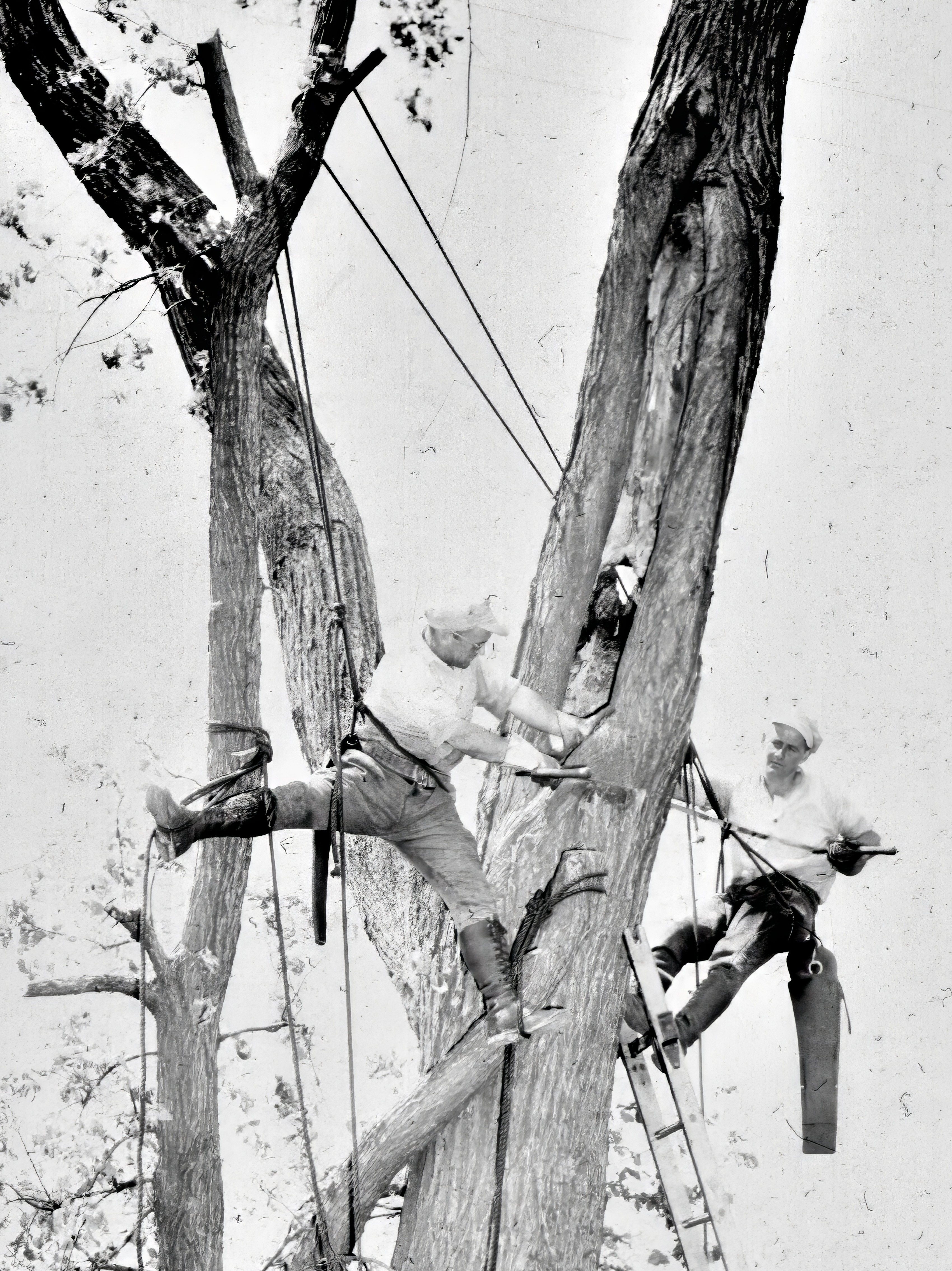
A true labour of love, author and former Ontario Hydro employee, Rick Rhem, has spent years and thousands of hours to assemble a comprehensive history of forestry at the provincial utility. This 343-page book is thoroughly researched and includes hundreds of pictures, dozens of figures and records, about 300 acknowledgements and almost 400 references. Rick, like many in the Forestry Division (although there were many name changes throughout the years, I’ll stick with this one for simplicity and consistency) was a graduate forester and personally witnessed, about 45 years of its 96-year history. Originally targeted to mark the 90th anniversary in 2020, like many things, the pandemic changed that schedule and it was published in January 2026.
Although Ontario’s electric utility, then named Hydro Electric Power Commission of Ontario (HEPCO), was established by statute in 1906 to transmit electricity to municipalities the forestry Division was established in 1930, and staffed with 22 men, interestingly, from the Davey Tree Expert Company (a US based company) and with probably 1,000 staff today. Rick writes in a very readable style and peppers the book with anecdotes, stories, hundreds of names and generous with bouquets and the occasional brickbat when called for.
A major theme of the book is people. Almost all of the many pictures include people (most of them named) and many of them mark important local or provincial events with group pictures. It includes dozens of seniority records with names and titles of employees across Ontario going back to the 1940s. A second theme is the focus on safety. I have personal experience with organizations that purported to be committed to safety, but the Forestry Division understood deeply the inherent risk associated with working in, on and around trees and were intently focused on training and supervision. For example, ‘free climbing’ trees, while risky, was just part of the job and many forestry staff prided themselves on being good at it. After through study, Hydro banned it and replaced the practice with much safer and measured practice of ‘belaying’ (common in rock climbing) with ropes and various devises. While tragic, there have been only 3 fatalities in their 96-year history and in 20009 celebrated 5,000,000 hours without a lost time accident.
The book very thoroughly profiles the culture of innovation and constant improvement. In the 1950s they introduced an electric chainsaw for pruning strapped in a harness 40-50 feet up a tree complete with long extension cord plugged into a generator on the utility truck down below. In the 1980s they completely overhauled their approach to tree pruning (after doing it the ‘old’ way for 50 years) based on new research results from well respected researcher Dr. Alex Shigo, a pathologist for the US Forest Service. The book includes many experiments with new or adapted equipment over the decades to make the work safer and more efficient and effective. On average, the Forestry Division clears almost 30,000 kms/year over highly divers terrain, ground conditions facing some daunting accessibility challenges.
For those interested in governance and organizational change over time, the book provides an excellent history chronicling the almost endless restructuring, reorganizations; centralization/decentralization, downsizing/growth, name changes, title changes, outsourcing, spinout companies/repatriation, changing political priorities and associated tinkering and meddling. All pretty common for long lived public organizations but after 96 years, the Forestry Division still went out every day to get the job done.
The author traces the use of herbicides which has always been part of the toolkit for clearing lines. Starting back in the late 1970s the use of 2,4,5-T and 2,4-D came under heavy fire on health and environmental grounds, and the utility spent years and considerable investment to find effective and acceptable herbicide replacements. I suggest that Hydro has as much corporate knowledge on herbicides for forest use as any organization involved in forest management.
For those living in eastern Ontario, the recounts of various weather-related crises will be fascinating. In January ,1998 eastern Ontario and western Quebec experienced a devastating ice storm that lasted 3-4 days, but the effects went of for weeks and in some landscapes can still be seen today. The Forestry Division faced 120 downed transmission towers, 2,000 downed poles and 3,000 kms of downed distribution lines..and this was just Ontario Hydro’s infrastructure …municipalities, townships, counties and private owners also had their hands full. This crisis resulted in crews from across Ontario (some from the US) to pack up and head to ice storm path of destruction at very short notice. Hurricane Sandy that hit the US northeast (and parts of Ontario and Quebec) in 2012 provided forestry crews to return the favour and help out their US colleagues. The derecho of 2022 laid down hundreds of thousand of trees across eastern Ontario, many of them across transmission lines and infrastructure. Once again, the Forestry Division stepped up and cleared lines and got the power flowing.
It should be noted that one of the original FHO Board members Tom Griffith was a long time senior manager with the Forestry Division and has written a forward to this book….and gives a great shout out to Forest History Ontario. It is noteworthy that a former Chief Executive Officer, Laura Formusa, also contributes a forward in the book and writes very positively and even affectionately about the wonderful work and history of the Forestry Division.
I found the book an invaluable collection of historical facts, stories, people and event that have shaped this organization over almost 100 years. Almost so much so that it is hard to take it all in. I found the perspective from the author very refreshing in that this is not an academic chronological detailing of dates, facts, events nor a ‘top down’ (and maybe rose coloured) perspective of a former CEO embedded in their memoirs. This is from a guy that worked a long time in the place, knew a lot of folks, liked his job and wanted to make sure this history isn’t lost.
If you are interested in getting a copy of the book you can contact the author Rick Rhem at
Good work Rick.
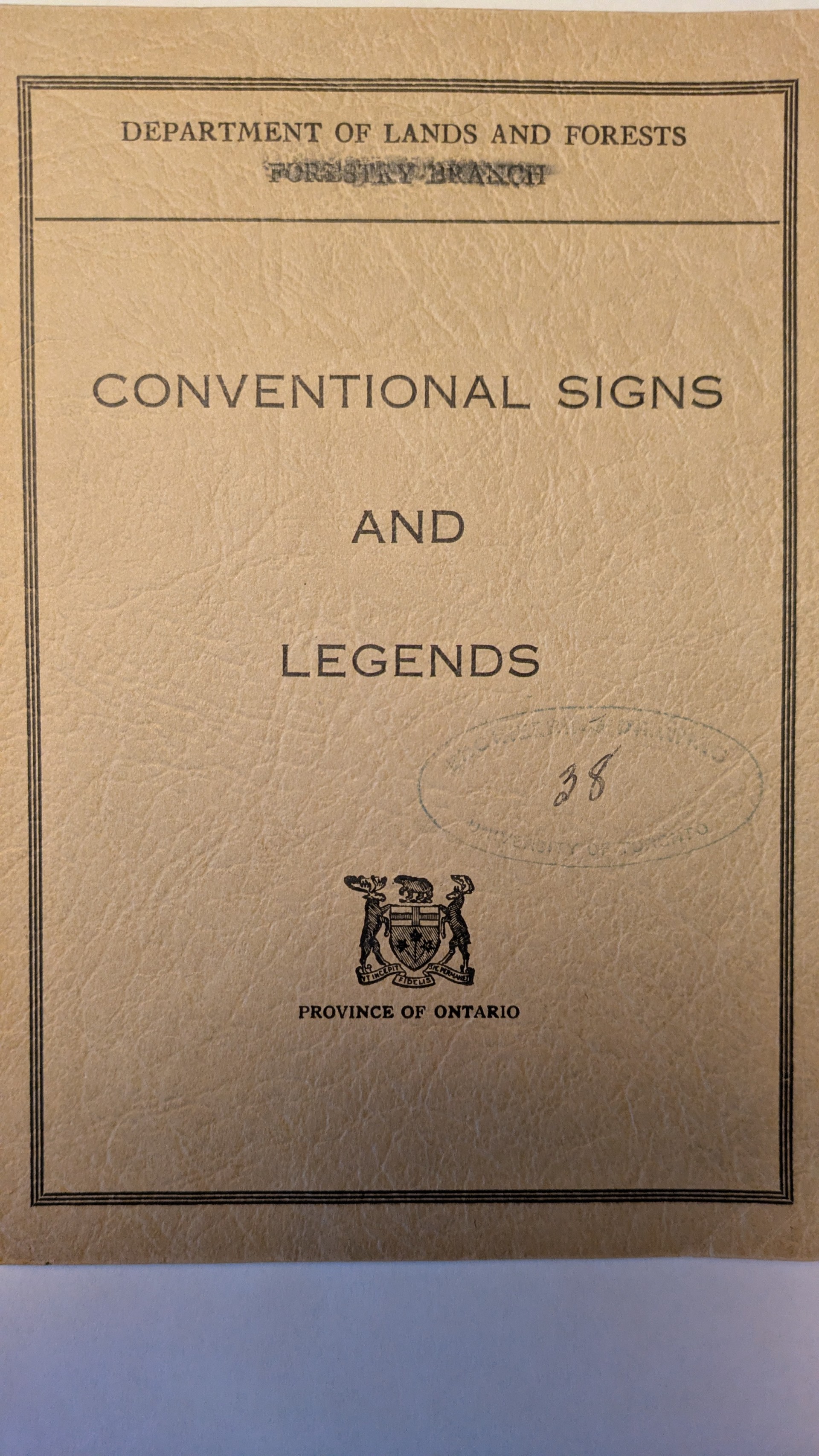
Shortly after our February 12, 2026 Annual Meeting I was contacted by long-time member and supporter, Herb Bax, about a historic Lands and Forests document that has been in his library for a while and offered to contribute it to FHO. It is quite short (PDF link) and quite cryptic. It is titled Conventional Signs and Legends and dated 1934. I am speculating, but it appears to be a guide for L&F cartographers who were in the early days of map making to ensure they all used the same legends on their maps. Aerial photography in Ontario took root in the early 1920s or so and presumably maps in 1934 were much more accurate and somewhat easier to produce than relying on large scale field crews or aerial sketching (which likely had a variety of symbols and keys to identify land features natural and manmade). It is also interesting to note on the inside cover F. A. MacDougall is identified as the Deputy Minister (who is named after our forest history Fund) and Edmund Zavitz is named as Chief, Division of Reforestation. Further, this information is on a small 'label' stapled over the original printing of Minister and Deputy when the guide was originally published...presumably the Minister changed and this was a way of updating the document. The original titles under the label features W. Finlayson as Minister and Edmund Zavitz as Deputy Minister of Forestry. Finally, the front cover features 'Forestry Branch' under the Lands and Forests title (may be hard to see in the scanned copy), but efforts were made to redact that title. I understand that for some time Forestry Branch was a title used commonly but maybe there was a push on to get staff to call it Lands and Forests? Fascinating. Admittedly, this may be a bit eclectic for some...maybe many...but an interesting glimpse of history and early forestry map making that, I suspect, predated Forest Resource Inventory (FRI).
- Jim Farrell