
A true labour of love, author and former Ontario Hydro employee, Rick Rhem, has spent years and thousands of hours to assemble a comprehensive history of forestry at the provincial utility. This 343-page book is thoroughly researched and includes hundreds of pictures, dozens of figures and records, about 300 acknowledgements and almost 400 references. Rick, like many in the Forestry Division (although there were many name changes throughout the years, I’ll stick with this one for simplicity and consistency) was a graduate forester and personally witnessed, about 45 years of its 96-year history. Originally targeted to mark the 90th anniversary in 2020, like many things, the pandemic changed that schedule and it was published in January 2026.
Although Ontario’s electric utility, then named Hydro Electric Power Commission of Ontario (HEPCO), was established by statute in 1906 to transmit electricity to municipalities the forestry Division was established in 1930, and staffed with 22 men, interestingly, from the Davey Tree Expert Company (a US based company) and with probably 1,000 staff today. Rick writes in a very readable style and peppers the book with anecdotes, stories, hundreds of names and generous with bouquets and the occasional brickbat when called for.
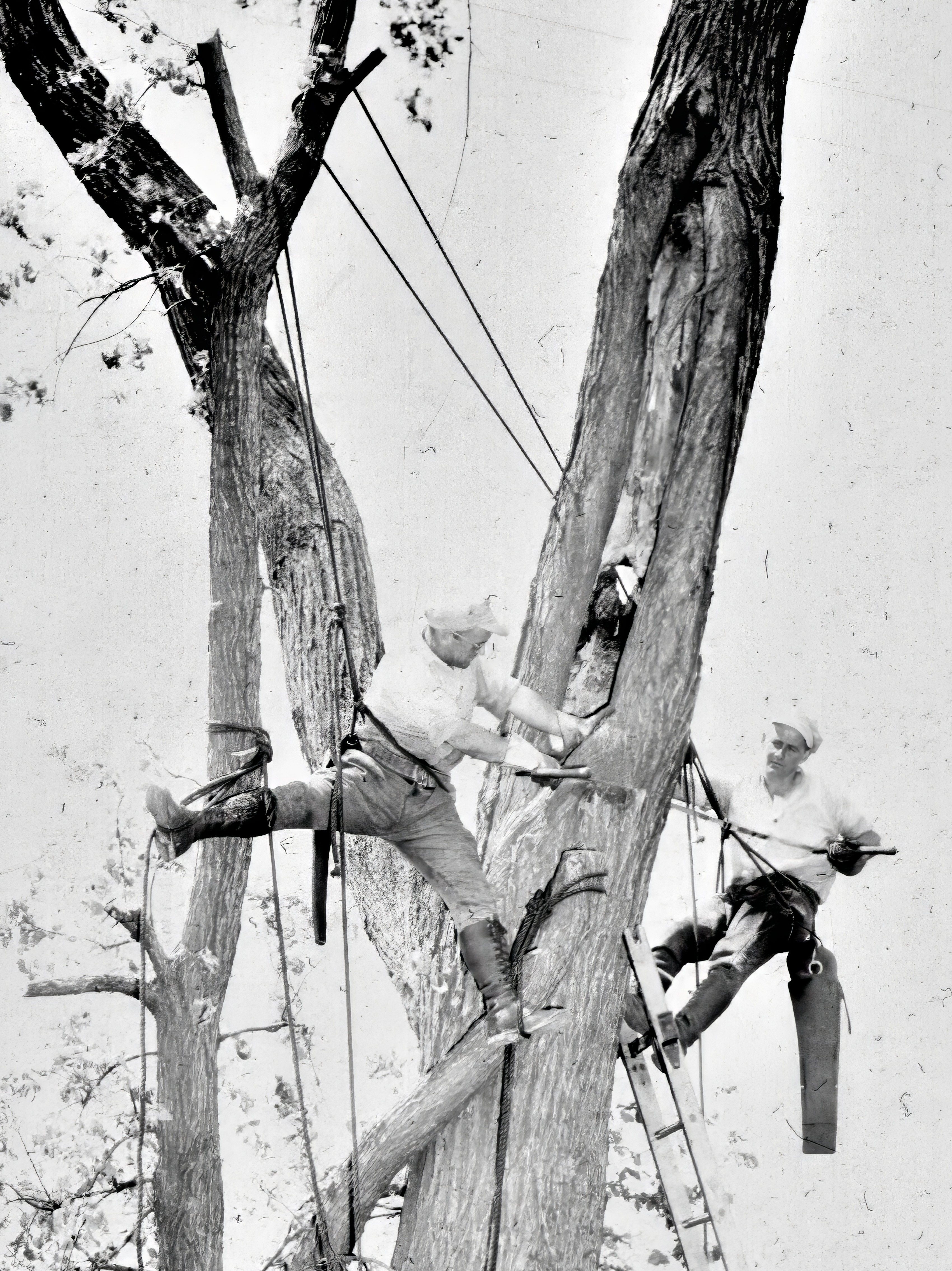
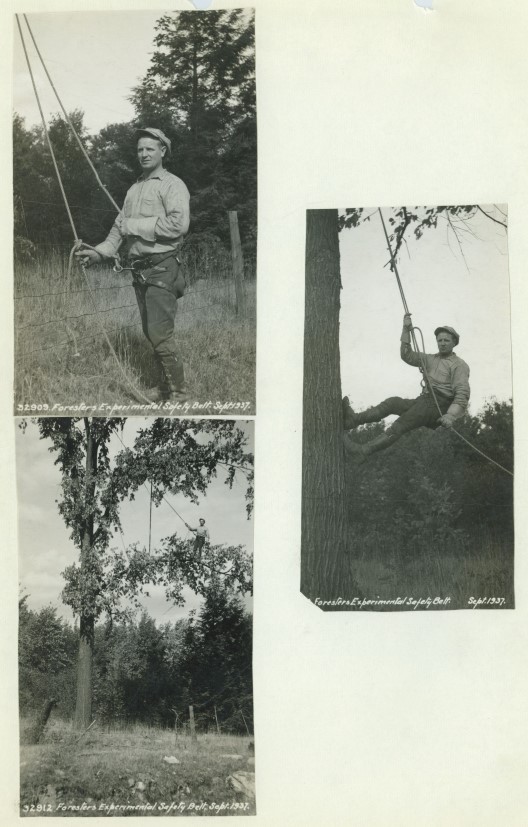
A major theme of the book is people. Almost all of the many pictures include people (most of them named) and many of them mark important local or provincial events with group pictures. It includes dozens of seniority records with names and titles of employees across Ontario going back to the 1940s. A second theme is the focus on safety. I have personal experience with organizations that purported to be committed to safety, but the Forestry Division understood deeply the inherent risk associated with working in, on and around trees and were intently focused on training and supervision. For example, ‘free climbing’ trees, while risky, was just part of the job and many forestry staff prided themselves on being good at it. After through study, Hydro banned it and replaced the practice with much safer and measured practice of ‘belaying’ (common in rock climbing) with ropes and various devises. While tragic, there have been only 3 fatalities in their 96-year history and in 20009 celebrated 5,000,000 hours without a lost time accident.
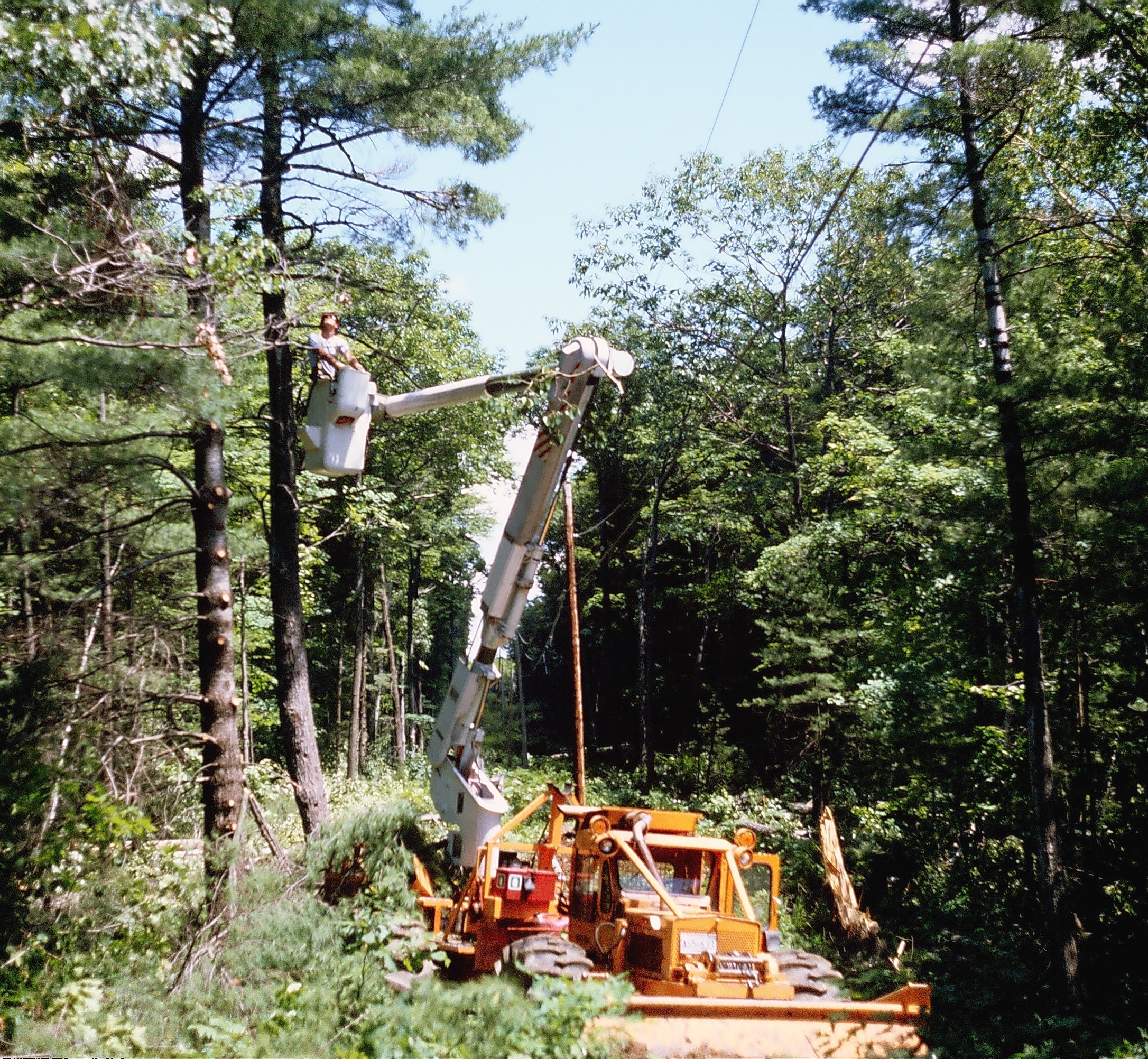
The book very thoroughly profiles the culture of innovation and constant improvement. In the 1950s they introduced an electric chainsaw for pruning strapped in a harness 40-50 feet up a tree complete with long extension cord plugged into a generator on the utility truck down below. In the 1980s they completely overhauled their approach to tree pruning (after doing it the ‘old’ way for 50 years) based on new research results from well respected researcher Dr. Alex Shigo, a pathologist for the US Forest Service. The book includes many experiments with new or adapted equipment over the decades to make the work safer and more efficient and effective. On average, the Forestry Division clears almost 30,000 kms/year over highly divers terrain, ground conditions facing some daunting accessibility challenges.
For those interested in governance and organizational change over time, the book provides an excellent history chronicling the almost endless restructuring, reorganizations; centralization/decentralization, downsizing/growth, name changes, title changes, outsourcing, spinout companies/repatriation, changing political priorities and associated tinkering and meddling. All pretty common for long lived public organizations but after 96 years, the Forestry Division still went out every day to get the job done.
The author traces the use of herbicides which has always been part of the toolkit for clearing lines. Starting back in the late 1970s the use of 2,4,5-T and 2,4-D came under heavy fire on health and environmental grounds, and the utility spent years and considerable investment to find effective and acceptable herbicide replacements. I suggest that Hydro has as much corporate knowledge on herbicides for forest use as any organization involved in forest management.
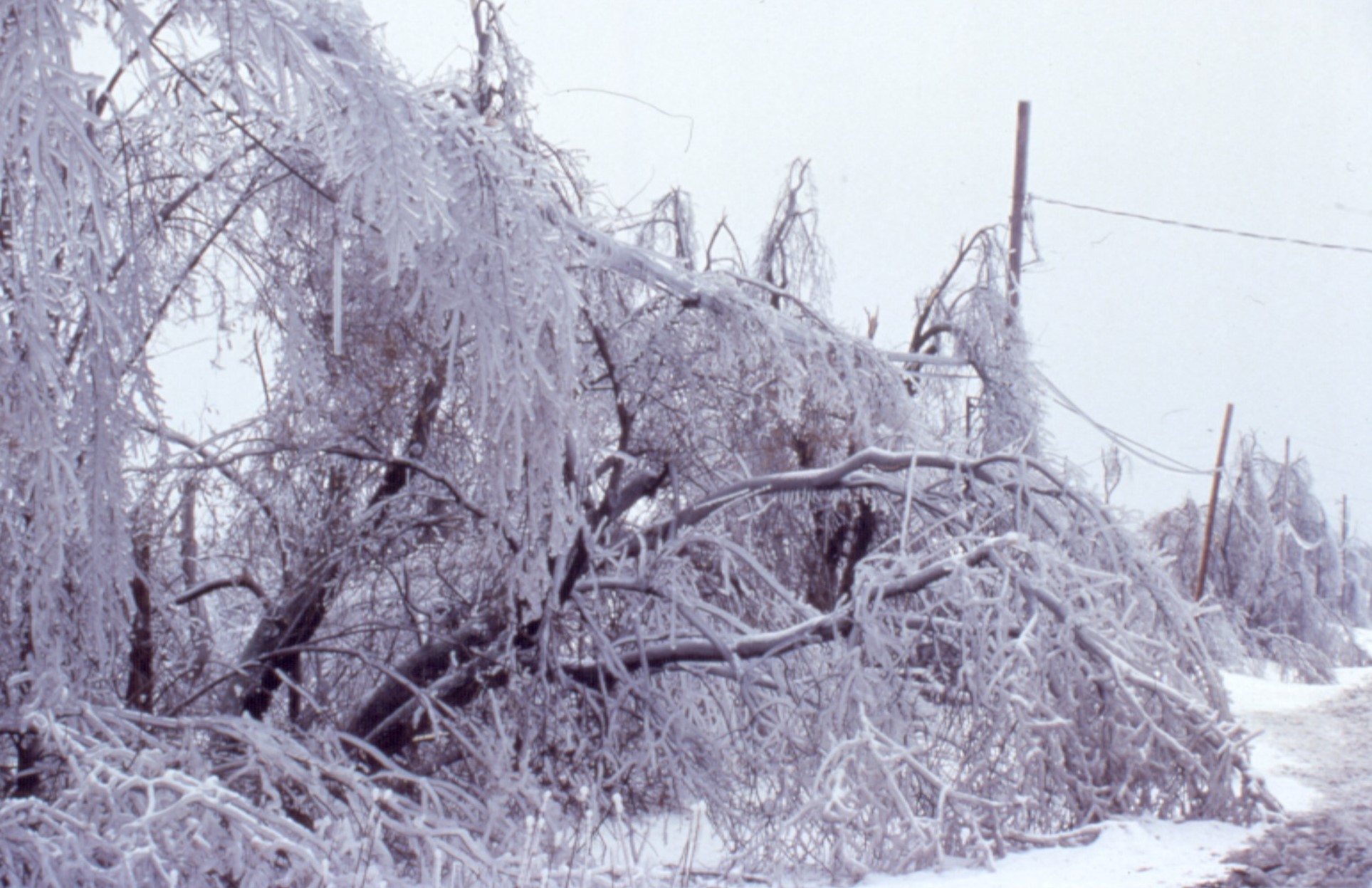
For those living in eastern Ontario, the recounts of various weather-related crises will be fascinating. In January ,1998 eastern Ontario and western Quebec experienced a devastating ice storm that lasted 3-4 days, but the effects went of for weeks and in some landscapes can still be seen today. The Forestry Division faced 120 downed transmission towers, 2,000 downed poles and 3,000 kms of downed distribution lines..and this was just Ontario Hydro’s infrastructure …municipalities, townships, counties and private owners also had their hands full. This crisis resulted in crews from across Ontario (some from the US) to pack up and head to ice storm path of destruction at very short notice. Hurricane Sandy that hit the US northeast (and parts of Ontario and Quebec) in 2012 provided forestry crews to return the favour and help out their US colleagues. The derecho of 2022 laid down hundreds of thousand of trees across eastern Ontario, many of them across transmission lines and infrastructure. Once again, the Forestry Division stepped up and cleared lines and got the power flowing.
It should be noted that one of the original FHO Board members Tom Griffith was a long time senior manager with the Forestry Division and has written a forward to this book….and gives a great shout out to Forest History Ontario. It is noteworthy that a former Chief Executive Officer, Laura Formusa, also contributes a forward in the book and writes very positively and even affectionately about the wonderful work and history of the Forestry Division.
I found the book an invaluable collection of historical facts, stories, people and event that have shaped this organization over almost 100 years. Almost so much so that it is hard to take it all in. I found the perspective from the author very refreshing in that this is not an academic chronological detailing of dates, facts, events nor a ‘top down’ (and maybe rose coloured) perspective of a former CEO embedded in their memoirs. This is from a guy that worked a long time in the place, knew a lot of folks, liked his job and wanted to make sure this history isn’t lost.
If you are interested in getting a copy of the book you can contact the author Rick Rhem at
Good work Rick.