
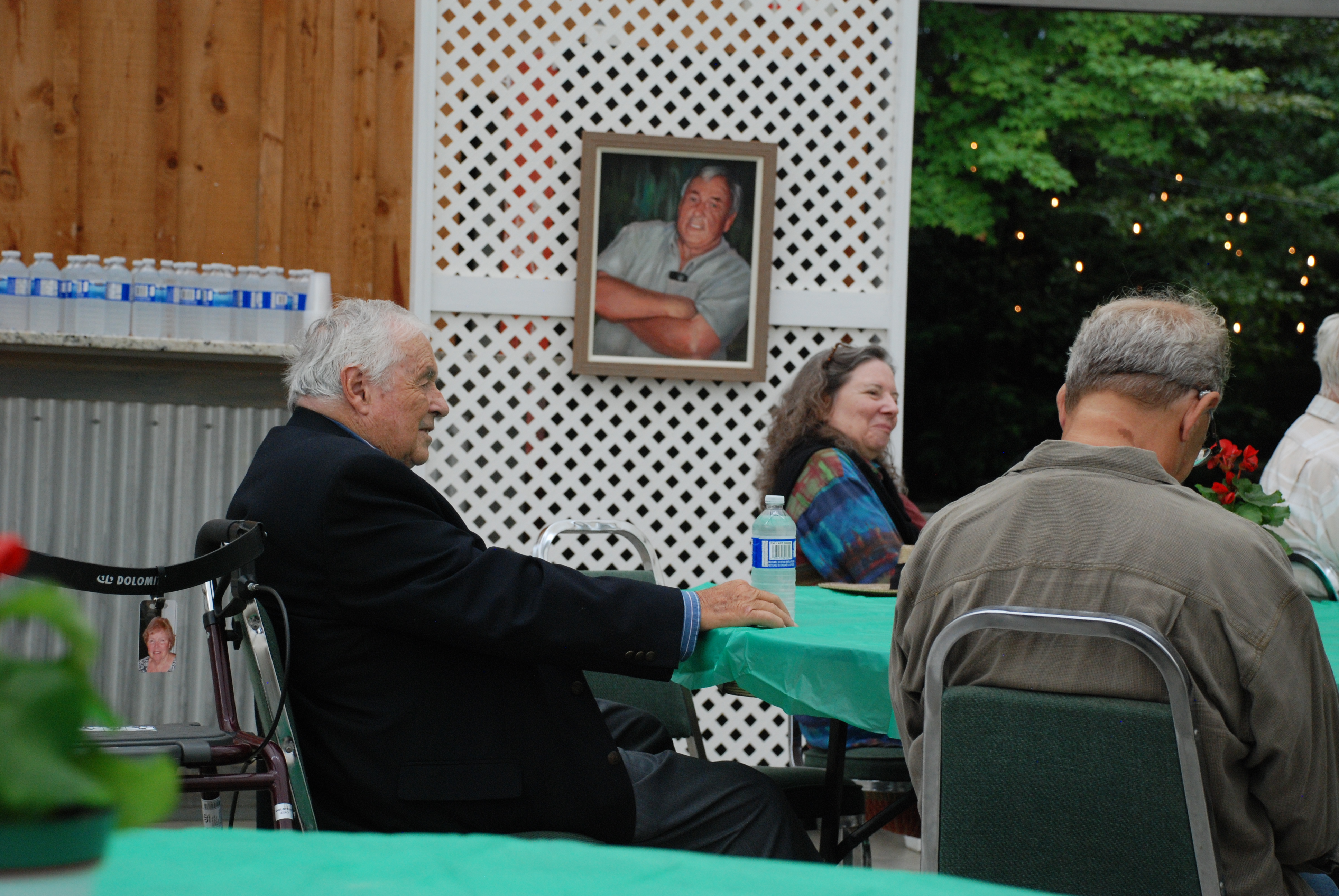
Earlier this year, we lost an innovative and highly respected forester who was well known and respected in forestry, business and professional circles across the province. Doug was a founding supporter of Forest History Ontario (then the Forest History Society of Ontario) and engaged in a number of FHO activities. On a FHO field tour a few years ago he demonstrated his remarkable recall of projects and activities he was involved in decades earlier by regaling the tour with anecdotes and details of work done in the 1950s.
Doug was a caring family man, loyal and generous friend, and accomplished forester, farmer, entrepreneur and philanthropist, Doug left behind a legacy of kindness, generosity, success and inspiration that continues to enrich the lives of all those who knew him.
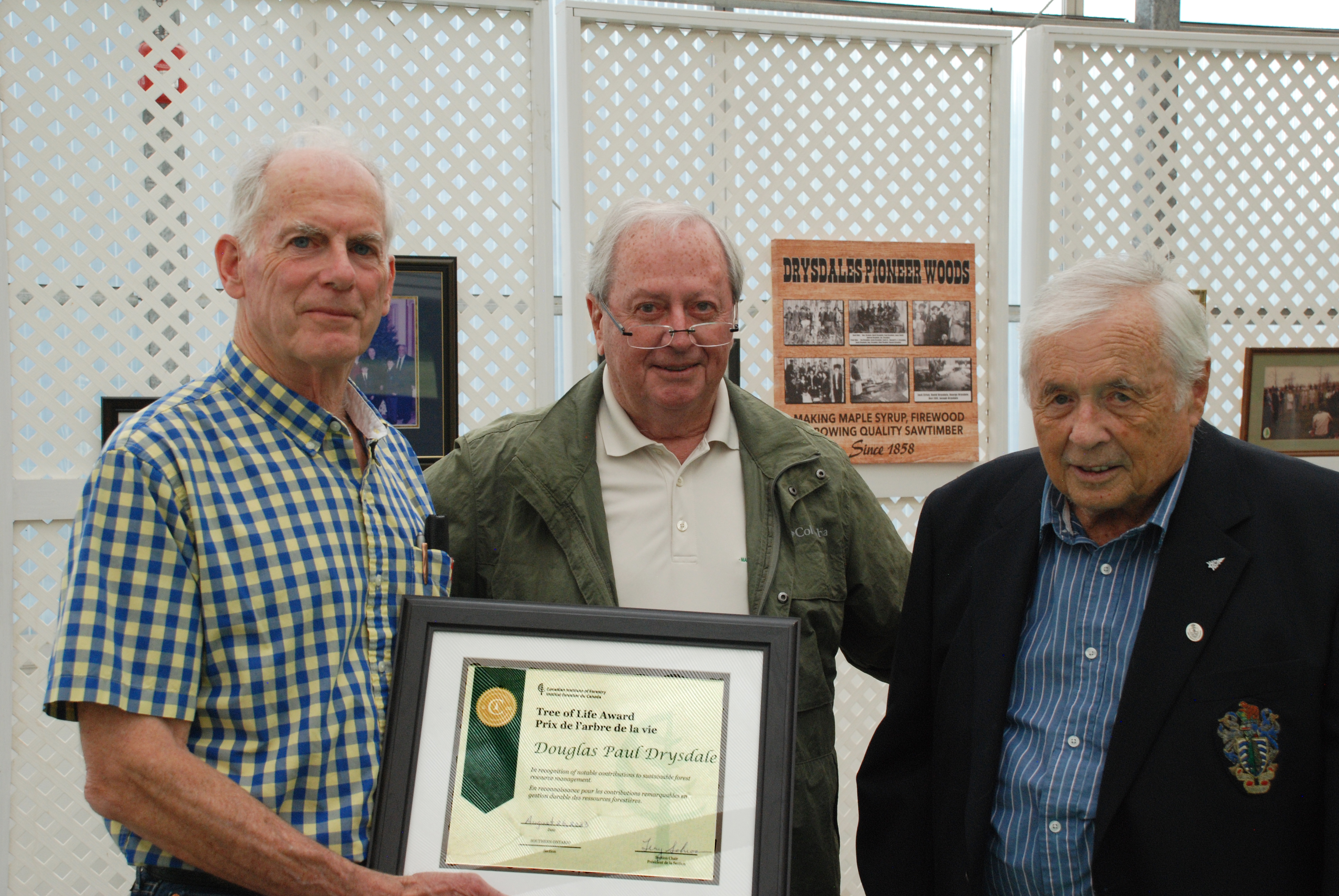
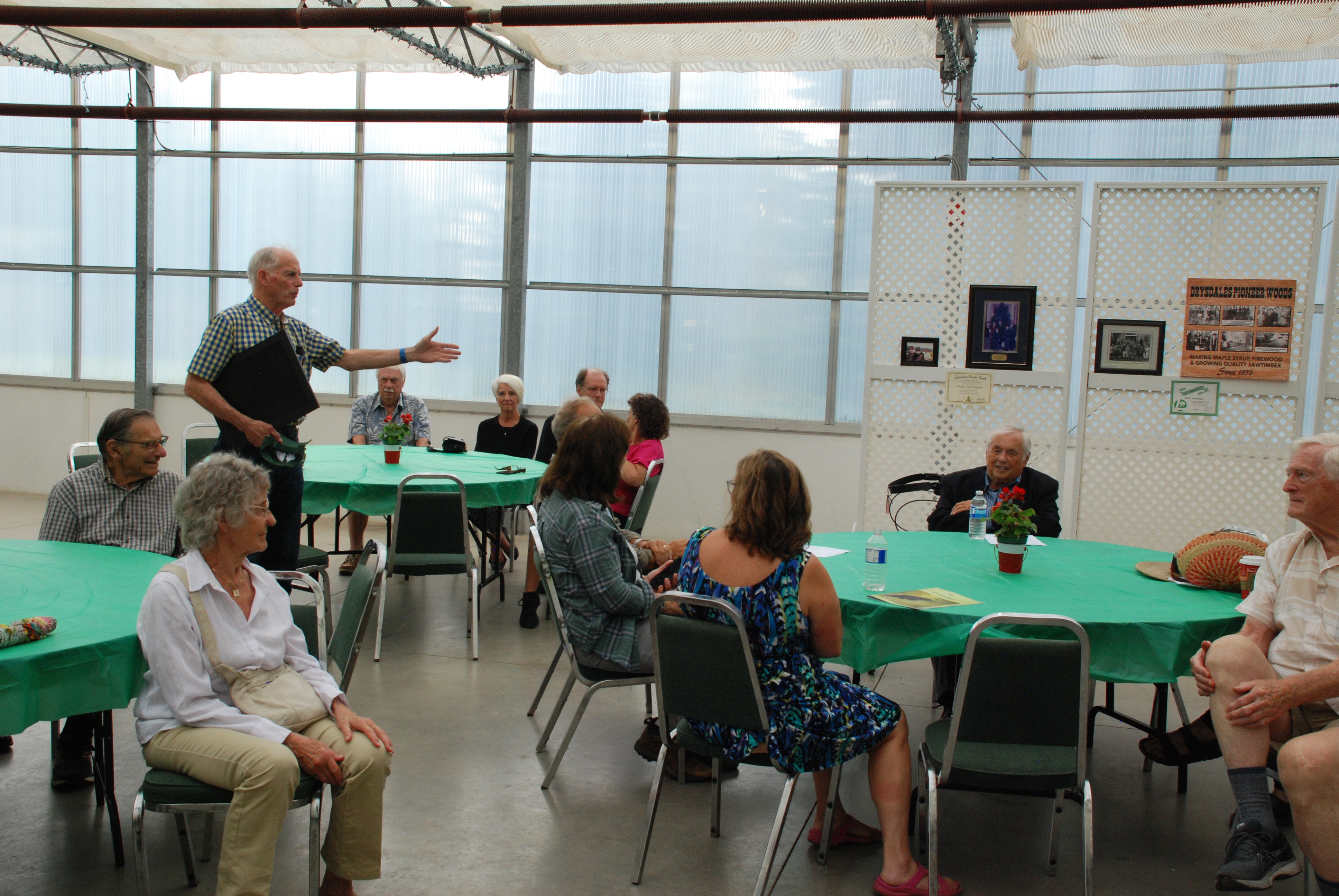
Doug recounted his career to his daughter Donna Crowley who then transcribed it. It provided valuable background for his Tree of Life Award celebration (April, 2023) from the Southern Ontario Section of the Canadian Institute of Forestry. A lightly edited version of that is provided as follows.
In 1944 Doug planted his first trees with his father at their Cookstown property and has planted trees every year since. In the fall of 1950, he started a 4-year program with the Faculty of Forestry at the University of Toronto and worked part time for Ross Grinnell with the Department of Lands and Forest throughout the school year. Over those 4 years of his undergraduate degree, he compiled County Forest inventory information from permanent sample plots.
In the summer of 1951 Doug joined the Department of Planning and Development and was the Party Chief mapping the height of land around watersheds for the Grand River (including the Speed River, Eramosa River and Nith River – tributaries of the Grand River). That summer his team also mapped the watershed for the Holland River. The aim of the mapping was to facilitate the establishment of the River Valley Conservation Authorities. That year Doug discovered a property in Ballantrae while working at his summer job mapping watersheds and seeing its value, promptly bought it.
The next summer, 1952, Doug was a field officer with the newly formed Ontario Christmas Tree Grower’s Association. In this role, Doug visited properties to inform owners of the suitability of their land to grow Christmas trees as a cash crop. In 1953 he worked (along with Bill Forman and Bob Staley) for the Ontario Department of Lands and Forests mapping and inventorying numerous county forest properties primarily in Simcoe County, York County, Ontario County and the Ganaraska watershed.
Doug graduated from U of T with his BscF in 1955 and continued his education starting a Master’s of Forest Economics studying the history of Forestry and the future of Forestry in Simcoe County. Fieldwork involved visiting all of the wood using industries (e.g., sawmills, crate building and furniture factories) in Simcoe County.
In the summer of 1956 Doug worked as an Assistant to Professor David P. Love (U of T, Faculty of Forestry) to determine the economic feasibility of acquiring sufficient wood annually to operate the Ontario Paper Company mill at Thorold, Ontario. This involved a survey of all forest properties within reasonable hauling distance to Thorold.
After successfully competing his Masters (MscF) in 1957 he was hired into the Department of Lands and Forests by Terk Bayly (at that time, Terk was the head of the Reforestation Branch) who went on to become Assistant Deputy Minister and then Deputy Minister of the Department of Lands and Forests. Terk hired Doug with the goal of having him eventually work at Queen’s Park, but recognized the importance of Doug having appropriate field experience to establish a positive relationship with the various field organizations in the industry. With that aim, Terk appointed Doug as Zone Forester for the Southern half of the Lake Simcoe District (all of Peel, York and Ontario Counties). Doug was based at Maple, Ontario and had direct management responsibility for York County Forest (11,000 acres), Ontario County Forest (5,000 acres) and the Metro Toronto and Region Conservation Authority Forest (10,000 acres). During the 2 years that Doug was Zone Forester, he added about 500 acres near Pefferlaw to the York County Forest.
After 2 years in the Lake Simcoe District Doug was moved to head office in 1959 starting first at the Downsview office (housed in the Department of Highways building at Hwy 401 and Keele Street). He shared an office with Dr. Walter Plonski and John Morawski – 2 newly acquired Polish foresters that provided Doug with wonderful learning experiences. Walter Plonski was a former Foresty professor in Poland and John Morawski was a District Manager of one of the largest forest districts in Poland before WWII. Art Herridge was Doug’s immediate supervisor.
In 1960 Doug was named Forest Economist and was moved to the Dep’t of Lands and Forests head office at Whitney Block, Queen’s Park. Lew Ringham was Doug’s immediate supervisor. Terk Bayly was the Chief of the Reforestation Branch on the timber side of things and J.A. (Steve) Brodie was the Chief of the Timber Branch. Doug met often with Brodie and Frank McDougal (Deputy Minister) and the Honourable Kelso Roberts newly appointed Minister of the Ontario Department of Lands and Forests. (Roberts had recently lost out to John Robarts in the race to become Premier of Ontario). One of the things Doug did was to compile the first-ever comprehensive directory of all the primary wood using industries in Ontario. This was very well received and useful to the industries themselves. He followed this with a second industry directory which included all the furniture factories. At that time, there were more than 50 furniture factories – it was a strong industry, employing more people than the automotive industry. Doug was tasked with writing a report on what the future of wood utilization might look like. Basically, it predicted a resurgence of lumber production (which had declined in the post white pine era) and the mechanization of all aspects of harvesting. It seems obvious now, but that is basically what eventually happened. Still working under Lew Ringham and Art Herridge, Doug was encouraged to establish a Forest Economics unit and recruited some very capable people into this unit. His first hire was Larry Lambert. Al Nausedas soon followed and over the next several years the unit grew to include Mike Innes, Winfred Fruhauf, Vern Simpson, Chuck Howard and others. Doug headed an in-depth analysis of all private forest land in Southern Ontario. This had never been done before... and
has never been done since. They started working on what eventually became the Algonquin Forest Authority.
Around 1971, Doug was made the Executive Coordinator of the Timber Sales Branch (basically the head of all timber activities) with the Ministry of Natural Resources. This role included forest management planning, timber licensing, timber scaling and collection of Crown dues. It also encompassed the Forest Economics section. Doug remained in this position until 1981. During this era, Doug oversaw the Crown Timber Act revision, doubling the rates for Crown Timber. The volume of wood harvested in Ontario was doubled from that of 1970. This included the modernization of 31 pulp mills, the establishment of wafer board industries, widespread mechanization of harvesting machines, tree-length logging (instead of short wood), and weigh scaling (instead of measuring individual logs). It also included the development of new sawing techniques that allowed 2x4s to be manufactured from logs with only a 5” top. By 1980, annual lumber production exceeded the maximum production achieved during the heyday of the early white pine era. Doug participated with a Canadian Delegation and spoke at the World Forestry Congress in Jakarta, Indonesia in 1978.
It was during the 1970s that the NDP party under Stephen Lewis tried to stop all logging in Algonquin Park. Doug felt strongly that this would be a disaster for several thousand employees of primarily wood using industries and destroy the economic base for dozens of towns and villages. To combat this threat, Doug was given responsibility for dealing with this situation.
In 1981, Doug was asked to take on the management of the Forest Research Organization. He was appointed the General Manager of the Ontario Tree Improvement and Forest Biomass Institute (OTIFBI) situated at a more than 100 acre property at Maple, Ontario with field offices located at Swan Lake in Algonquin Park, Sault Ste-Marie, and Thunder Bay. Staff totalled between 175 and 200 with about 20 PhDs among them. This included research in forest genetics, soils, forest site classification, the development of new inventory methods, and biotechnology. Externally, Doug was involved with the Union of Forest Research Organizations (UFRO) and participation with Dr. Louis Zsuffa (one of Canada’s
representatives) in the International Union of Forest Energy. While Doug was the General Manager, he co-chaired, with Jim Cayford (Regional Director, Canadian Forestry Service in Sault Ste Marie) the administration of approximately $2 million annually in external research carried out by others (e.g. universities and consultants).
Doug officially retired from public service in 1989. He was, however, asked to stay on the organizing committee for the UFRO conference in Montreal in 1990.
While modest about his accomplishments, Doug was Honoured Professional Award with the Ontario Professional Foresters Association, Tree of Life award from the Canadian Institute of Forestry, Adjunct Professor (Faculty of Forestry, U of T) and Forestry Lecturer (Guelph University).
Drysdale Forest Farms was established as a family business in 1945 as a partnership with Doug and his father, Reg Drysdale. Doug was instrumental in the convincing his father in the early 1960s to open up their Ballantrae farm to become one of the first Christmas Tree farms in Canada to have families come to choose and cut their own tree. This family business rapidly expanded to 3 locations (Ballantrae, Cookstown and Essa). In 1984, Drysdale Forest Farms was replaced by Drysdale Tree Farms, Ltd. This family business continues to thrive and expand under the leadership of Doug’s son, Doug Jr., and his children, Andrew Drysdale and Serena Drysdale in key supporting roles.
Doug believed that he had been blessed to have been given chances to work with terrific mentors throughout his Forestry career and also been given opportunities and responsibilities that promoted his growth as professional forester.
Doug’s obituary below.
DRYSDALE, Douglas Paul - Obituary - Barrie - Barrie News
Career history provided by Doug Drysdale and transcribed by daughter Donna Crowley.
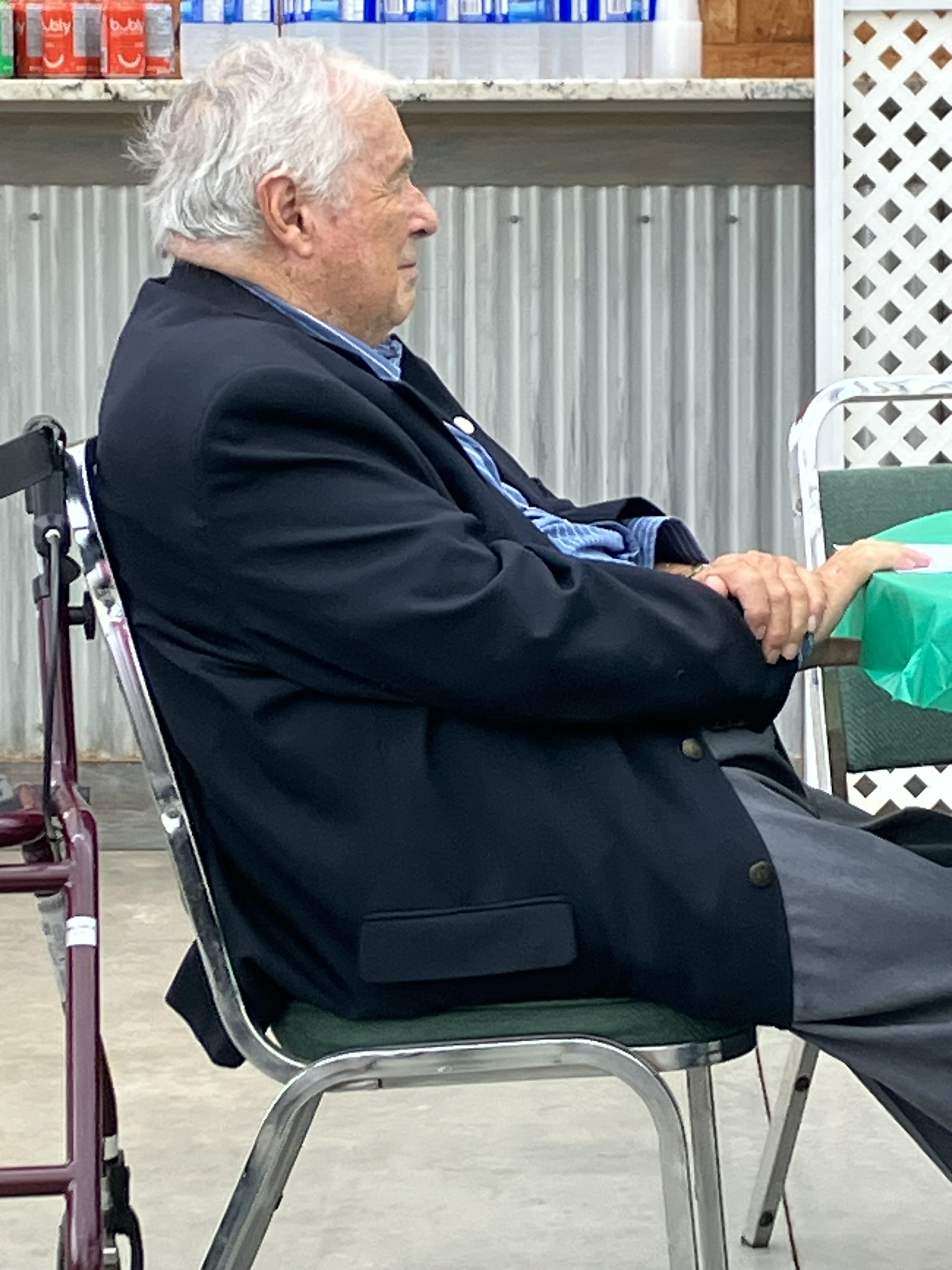
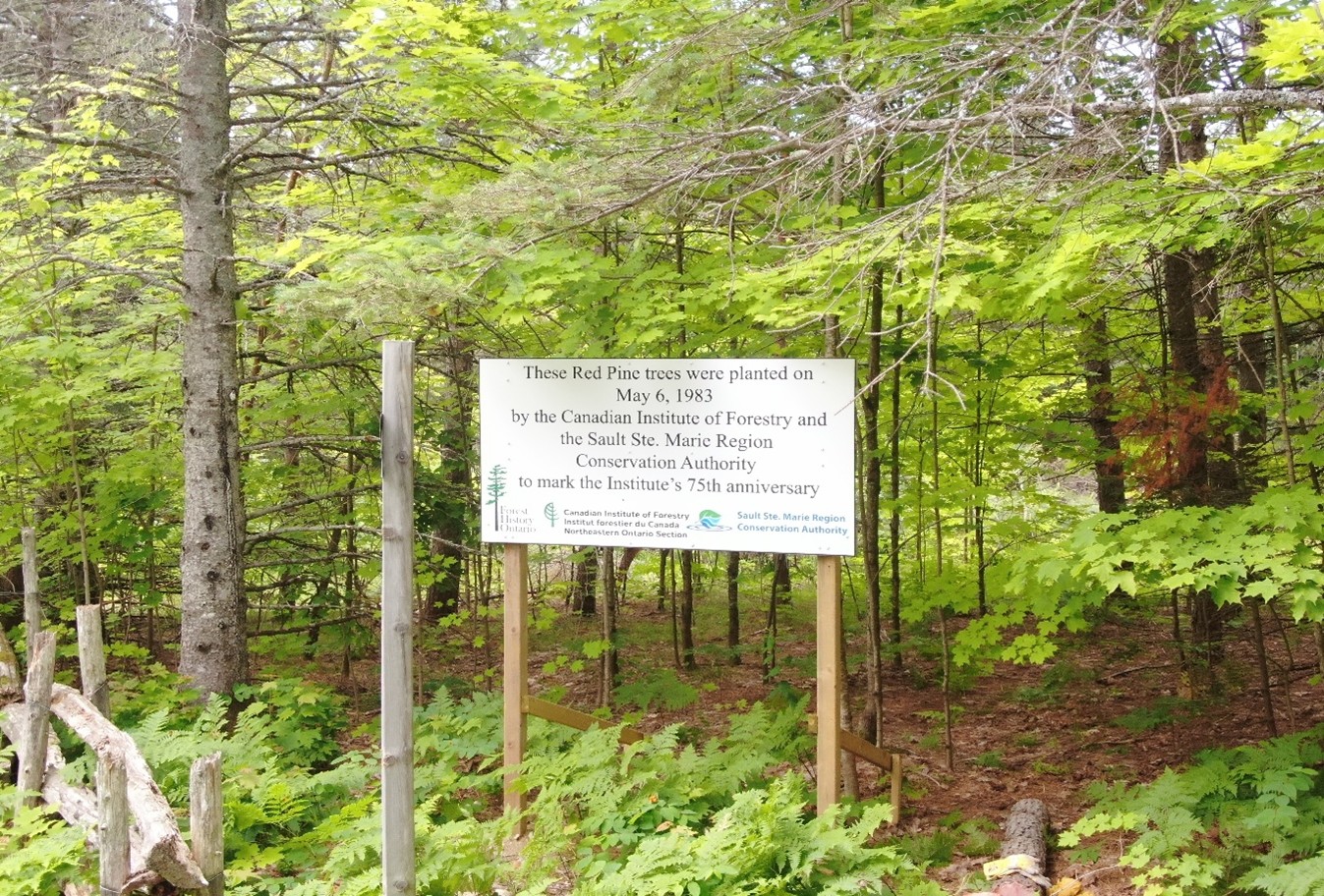
On October 3rd The Canadian Institute of Forestry – Northeastern Ontario Section in partnership with the Sault Ste Marie Conservation Authority hosted a celebration event to mark the 30th anniversary which included over fifty students from the Algoma District School Board and representatives of 14 local organizations.
Guy Smith, a council member with CIF, in Sault Ste Marie was recognized of for his 30 years of service to Algoma Envirothon. He received the National Conservation Foundation Envirothon Hall of Fame Award and the Maple Leaves Forever Ontario Envirothon Award from Forests Canada. In his remarks he commented on the hundreds of young people who have participated with energy and enthusiasm over the years and importantly increased their potential to shape the future of natural resource management and environmental science.
Recently Forest History Ontario members partnering with local CIF, have worked to revitalise the 1983 CIF Anniversary Plantation by installing interpretive signs that offer basic forest management information for students and the broader public to enjoy. These signs and some site maintenance activity to improve accessability, prepared the site for the very successful Envirothon program and celebration event.
On June 19, at its Annual General Meeting, the CBHC was pleased to open a new exhibit at its museum in Sault Ste Marie. It’s entitled, Not a Job but a Calling: Rangers, Game Wardens and the Ontario Forest Ranger School, was introduced and officially opened by CBHC Jamie Hilsinger Executive Director. Katie Dalton, Regional Enforcement Manager MNR, noted that the Ministry of Natural Resources has a long history of protecting Ontario’s Natural Resources spoke about how the exhibit brings this long story of conservation to life. Don Weltz, represneted Retired Conservation Officers of Ontario. Will Samis who was both a Forest Ranger and a Conservation Officer, and Jim Baker who is also a graduate of the Ranger School spoke on behalf of Ranger School Alumni.
Each display tells the story of the vital contribution of Game Wardens (Conservation Officers) and Forest Rangers in protecting and managing Ontario’s Natural Resources. Their efforts, often from the right seat of many of the aircraft in the museum’s collection, and the important contribution of the Ontario Forest Ranger School (1952-1967), in training students for these positions, are presented impressively in five four-sided kiosks. They offer written material, numerous photographs and many other interesting memorabilia items recalling the early history and development of this essential work in Ontario.
The exhibit was developed with the able leadership of CBHC’s curator Mary Collier and members of the Ontario Conservations Officers Association (and retired members) and The Ontario Forest Ranger School Alumni. In the project’s early planning days Forest History Ontario was also supportive of the emerging discussions and worked with the parties to assist where possible.
Several retired Conservation Officers and Forest Rangers took the time to attend and visit with former colleagues. All were impressed with the exhibit and happy that the material was assembled and now telling their story. The display will be on view at the Museum through 2025 and available afterwards for loan to other museums across the Province.
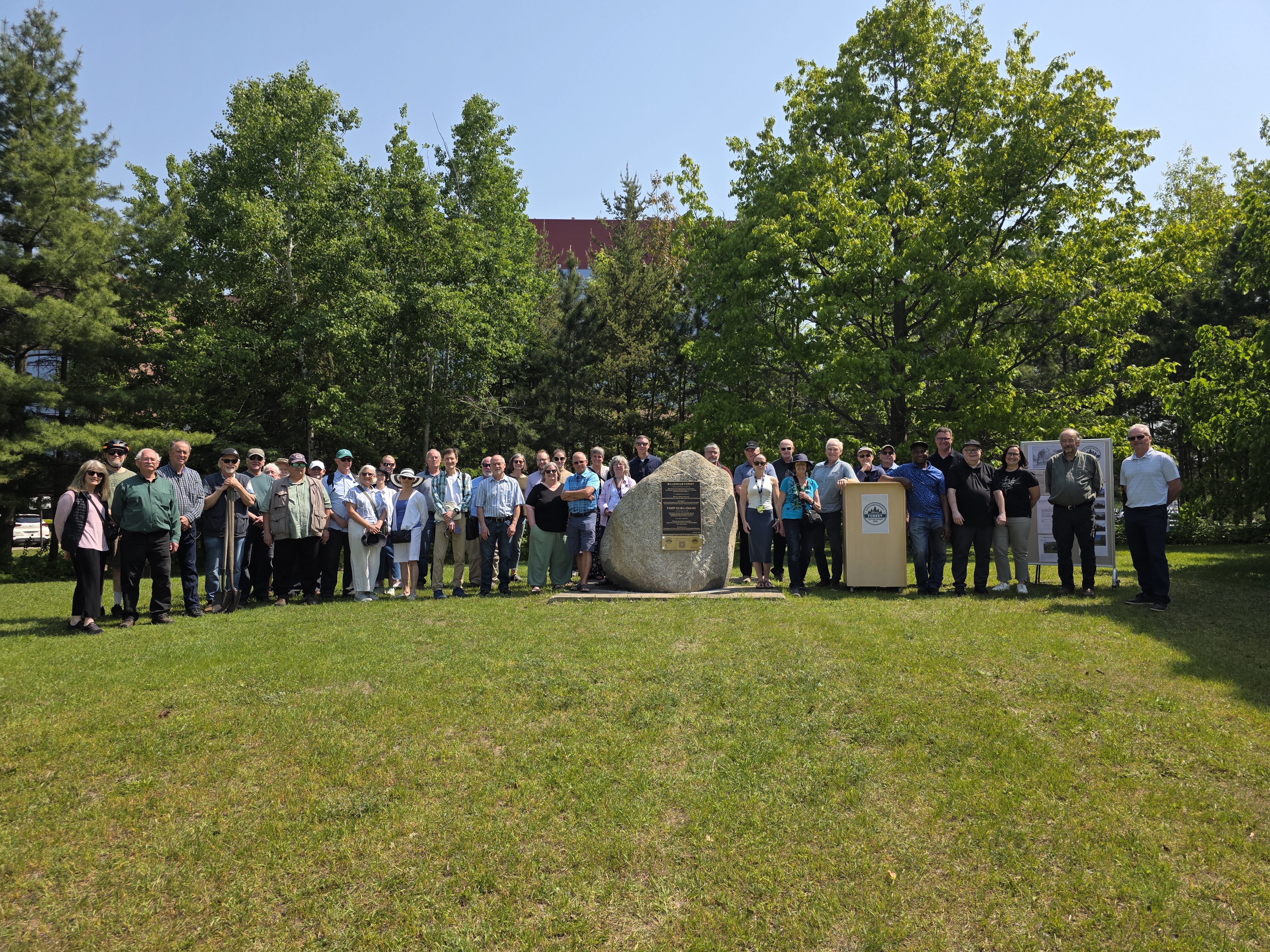
On June 5, 2025, approximately 65 forest community minded folks gathered in Sault Ste Marie to celebrate the 25th anniversary of the establishment of MNR Millennium Forest there, in the year 2000. This forest is a small representation of the Boreal and Great Lakes St Lawrence forests, now growing in an urban setting. It is located at the Roberta Bondar Building which is the corporate office for Ministry of Natural Resources Forestry staff.
The Millennium Forest project was the idea of Peter Gagnon, a longtime employee of MNR. He thought it appropriate that a portion of the original grass lawns in front of the Bondar Building be transformed into a forested area representing the Crown land forests managed by the MNR. With his background and experience in forest management he researched other work done to transform a lawn into a representation of forest landscape. With the help of many volunteers Peter’s concept put down roots and after 25 years, it thrives as mini ecosystem typical of Boreal and Great Lakes St Lawrence Forests, so important in Ontario.
Bill Thornton, former Deputy Minister of MNR and Director of the Provincial Forest Management Branch at the time, noted in his remarks the appropriateness of community members and organizations coming together here, to support the celebration on World Environment Day. He also spoke about the turn of the millennium as a time of some excitement, in celebrating such a rare milestone along with perhaps growing uncertainty about what the future might hold, especially with respect to the long-term well-being of the planet. The focus of those working in forest management and all those interested in the many values the forest brings to us all was then and continues to be, long term sustainability. Pausing for even a short time to recognize the effort that was put into establishing this landscape and the value it brings to the site today is confirmation of the commitment all of us should continue to carry forward.
The idea for an anniversary celebration was put forward by CIF and FHO member Frank Kennedy and he along with committee members from MNR, CIF NEOS and FHO, including Megan Smith, who chaired the group, Adrianna Pacitto, Eric Wainio, Bill Thornton, Peter Gagnon and Fraser Dunn, organized the event.
Many other partners joined in and supported the project work in 2000. They include Sault Ste Marie Golf and Country Club, Algoma Forest Coalition, Avery Construction, RM Moore Public School, Sault Ste Marie Airport Corporation, Clean North, Ontario Reality Corporation and Towland Hewitson. Their efforts were fundamental to the project’s success.
Today, FHO is pleased to have participated in the ceremony to recognize the SSM Millennium Forest which presents an important reminder of the prominence and importance of forest resources in Ontario and at the same time provides, pleasant and valuable urban green space for people to visit and enjoy.